

Welcome to the AcylERATE website.
AcylERATE is a 5-year cross-institutional project funded by the BBSRC sLoLa programme to investigate dynamic S-acylation using a multi-disciplinary approach, with the objective of delivering new insight into the physiological role of this post-translational modification in cell functions. The project will develop and implement tools and technologies to build a holistic understanding of the mechanisms and outcomes of dynamic S-acylation.
The project brings together experts in S-acylation and key enabling technologies and the work will accelerate progress in this field of research.
Latest News
- Progress Update in Coventry
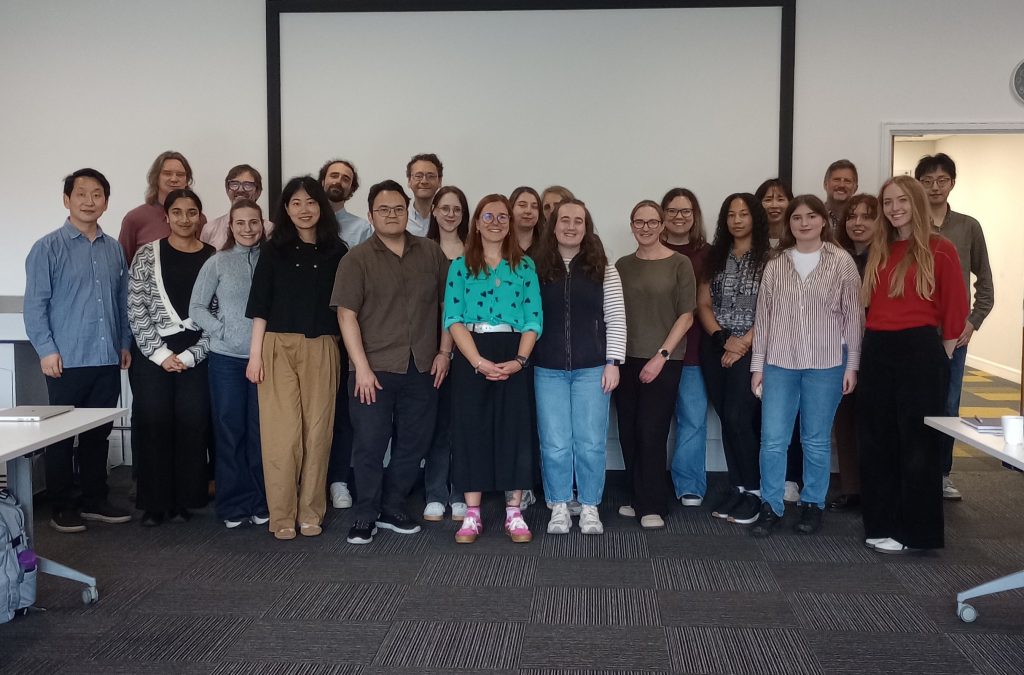
The AcylERATE team met at Coventry University on 18th September 2026 for a productive day of presentations, project updates and planning.
Thanks go to the team at Coventry University for hosting this in-person event and to all those who prepared and gave presentations during the day.
- Success at FASEB 2026
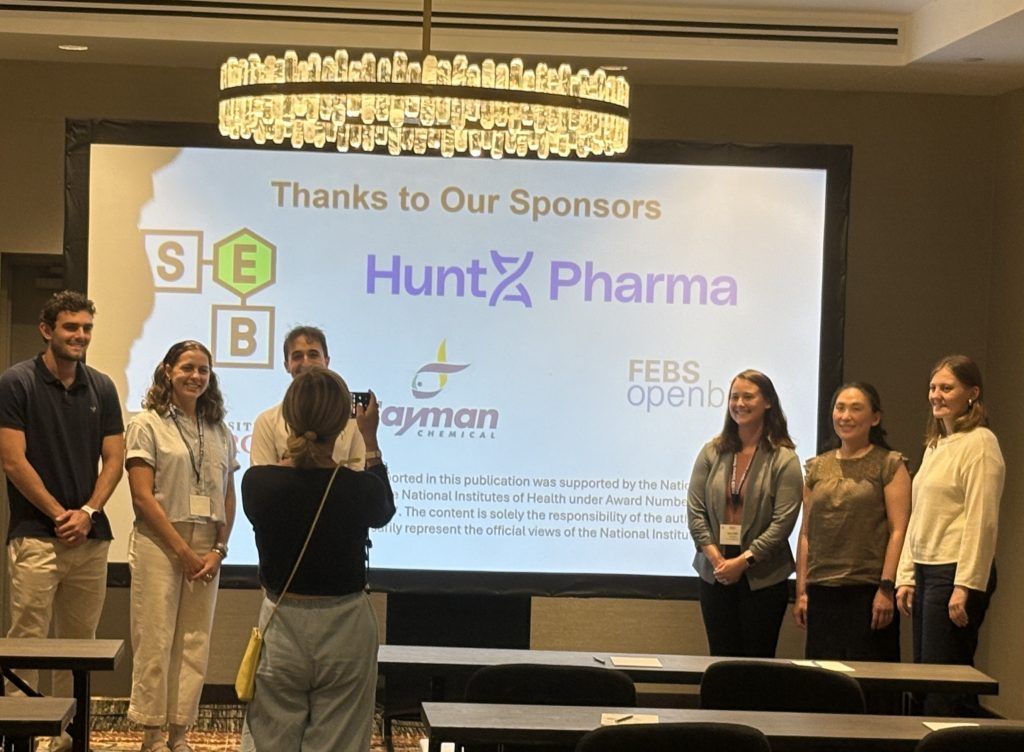
Congratulations to Anne Schuhmacher from Imperial College London for winning the prize at FASEB 2026 conference for best poster.
The AcylERATE team presented several talks at FASEB (Federation of American Societies for Experimental Biology) 2026 including invited presentations from Amina Nigmatulin (Imperial College London) and Gemma MacDonald (Strathclyde).
- Bifunctional Depalmitoylators: Towards Programmable Control of Protein Lipidation, Will Fuller, University of Glasgow, UK
- Defining zDHHC9–RAS Interactions and the Role of GCP16 in Substrate Recognition, Gemma MacDonald, Strathclyde University, UK
- Exploring protein S-acylation through chemical biology, Ed Tate, Imperial College London, UK
- SAPPHIRE: A high-throughput proteomics platform for profiling dynamic protein S-acylationusing phosphonate handles, Amina Nigmatulin, Imperial College London, UK
- Substrate specificity of the ABHD deacylases, Jennifer Greaves, Coventry University, UK
- Poster. Anne Schumacher, Imperial College London, UK
- Poster. Anna Scott, Strathclyde University, UK
- Poster. Laura Bartkova, Oxford University, UK
- Poster. Valerio Di Domenico, Oxford University, UK
- Prof Ari Sadanandom Seminar: Understanding the SUMO code for adaptive responses in plants
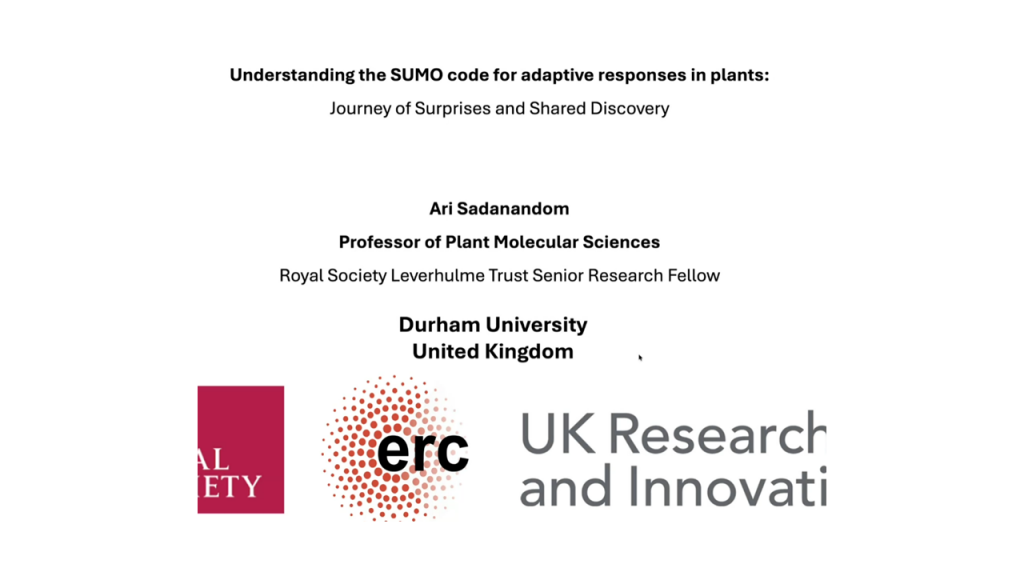
Ari Sadanandom discussed his work on SUMOylation in plants, focusing on how SUMO modification regulates protein function, signalling and developmental responses to environmental cues.
He highlighted experimental and computational approaches for studying SUMO-dependent signalling, including tools for detecting SUMOylated proteins, predicting candidate SUMOylation sites, and identifying proteins that interact through SUMO-interacting motifs. He also discussed the expansion and diversification of SUMO proteases in plants, consistent with increasing complexity in SUMO-dependent regulation. A key example was the SUMOylation of ARF7, which regulates root hydropatterning by controlling auxin-response activity and recruitment of the Aux/IAA repressor IAA3, thereby helping position lateral root formation in response to local water availability. The SUMO proteases OTS1/2 are also relevant to this pathway. Ari also described newer work showing that reactive oxygen species/redox signalling can regulate IAA3/SHY2 multimerisation, linking water-stress responses to auxin signalling and lateral root development. Overall, the seminar emphasised how SUMO protease expression, localisation and activity help determine where and when SUMO-dependent regulatory events occur.