News

  • Progress Update in Coventry

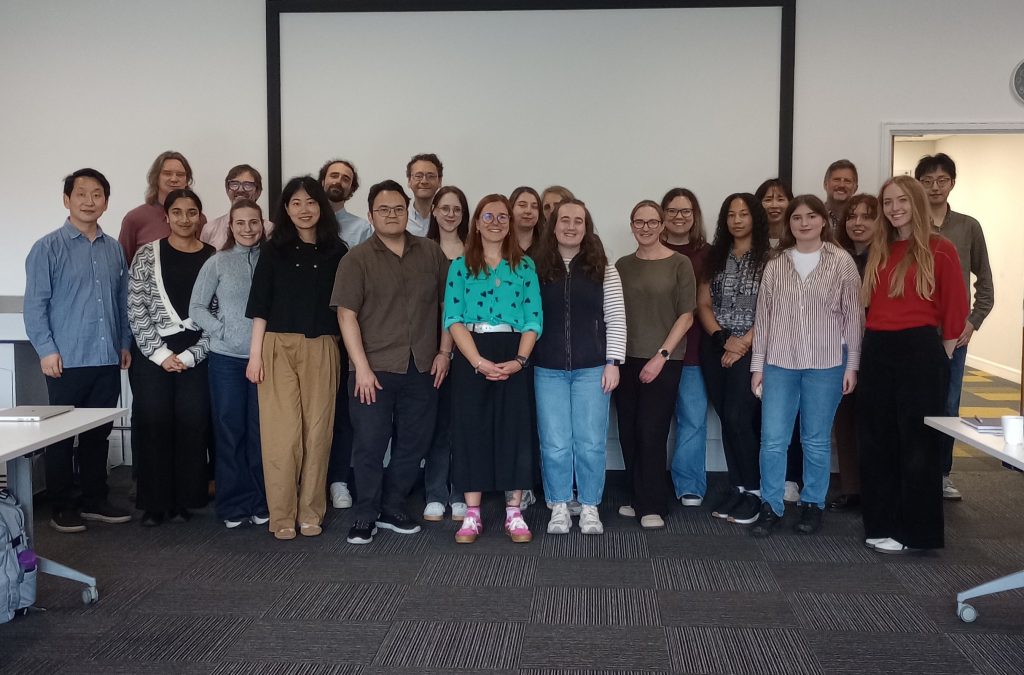
    The AcylERATE team met at Coventry University on 18th September 2026 for a productive day of presentations, project updates and planning.

    Thanks go to the team at Coventry University for hosting this in-person event and to all those who prepared and gave presentations during the day.

  • Success at FASEB 2026

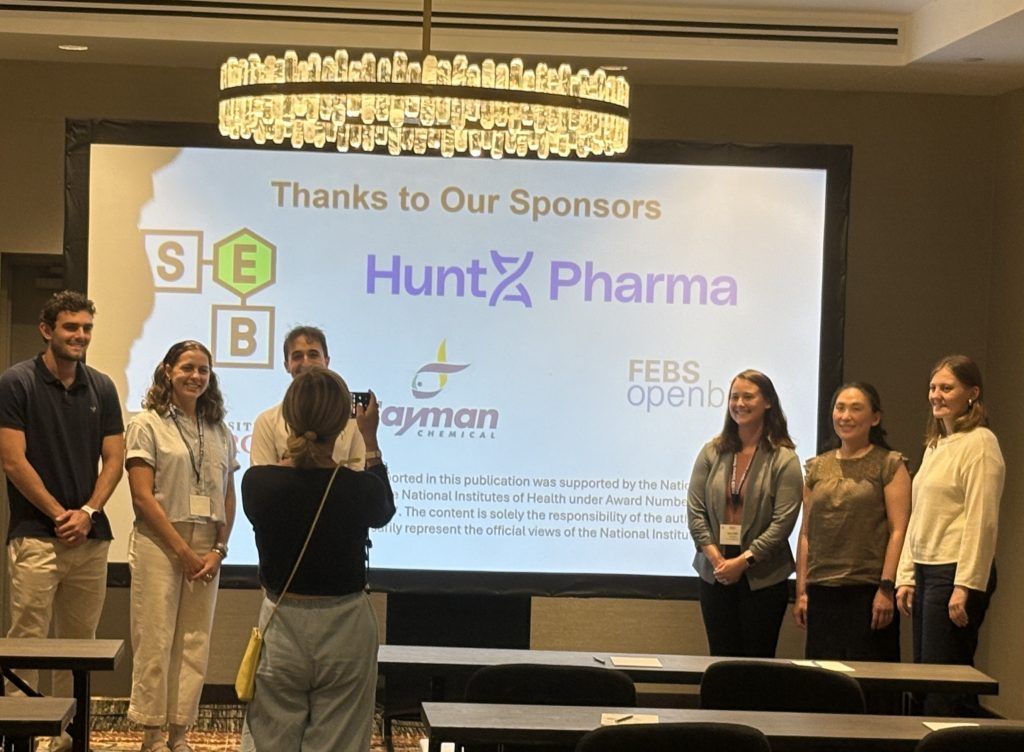
    Congratulations to Anne Schuhmacher from Imperial College London for winning the prize at FASEB 2026 conference for best poster.

    The AcylERATE team presented several talks at FASEB (Federation of American Societies for Experimental Biology) 2026 including invited presentations from Amina Nigmatulin (Imperial College London) and Gemma MacDonald (Strathclyde).

    • Bifunctional Depalmitoylators: Towards Programmable Control of Protein Lipidation, Will Fuller, University of Glasgow, UK
    • Defining zDHHC9–RAS Interactions and the Role of GCP16 in Substrate Recognition, Gemma MacDonald, Strathclyde University, UK
    • Exploring protein S-acylation through chemical biology, Ed Tate, Imperial College London, UK
    • SAPPHIRE: A high-throughput proteomics platform for profiling dynamic protein S-acylationusing phosphonate handles, Amina Nigmatulin, Imperial College London, UK
    • Substrate specificity of the ABHD deacylases, Jennifer Greaves, Coventry University, UK
    • Poster. Anne Schumacher, Imperial College London, UK
    • Poster. Anna Scott, Strathclyde University, UK
    • Poster. Laura Bartkova, Oxford University, UK
    • Poster. Valerio Di Domenico, Oxford University, UK

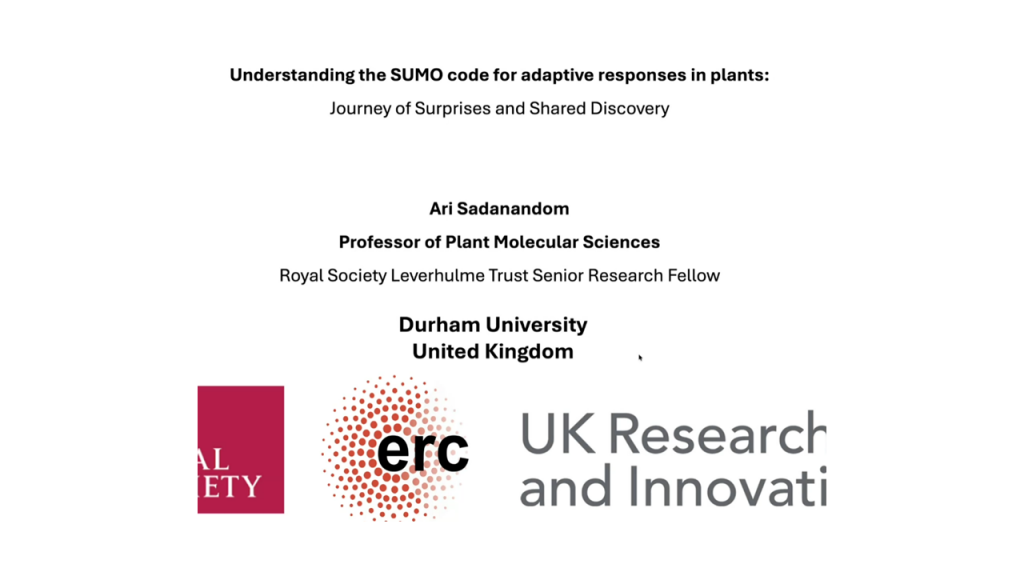
  • Prof Ari Sadanandom Seminar: Understanding the SUMO code for adaptive responses in plants

    Ari Sadanandom discussed his work on SUMOylation in plants, focusing on how SUMO modification regulates protein function, signalling and developmental responses to environmental cues.

    He highlighted experimental and computational approaches for studying SUMO-dependent signalling, including tools for detecting SUMOylated proteins, predicting candidate SUMOylation sites, and identifying proteins that interact through SUMO-interacting motifs. He also discussed the expansion and diversification of SUMO proteases in plants, consistent with increasing complexity in SUMO-dependent regulation. A key example was the SUMOylation of ARF7, which regulates root hydropatterning by controlling auxin-response activity and recruitment of the Aux/IAA repressor IAA3, thereby helping position lateral root formation in response to local water availability. The SUMO proteases OTS1/2 are also relevant to this pathway. Ari also described newer work showing that reactive oxygen species/redox signalling can regulate IAA3/SHY2 multimerisation, linking water-stress responses to auxin signalling and lateral root development. Overall, the seminar emphasised how SUMO protease expression, localisation and activity help determine where and when SUMO-dependent regulatory events occur.
  • Dr Virginia De Cesare Seminar: E2s that behave differently

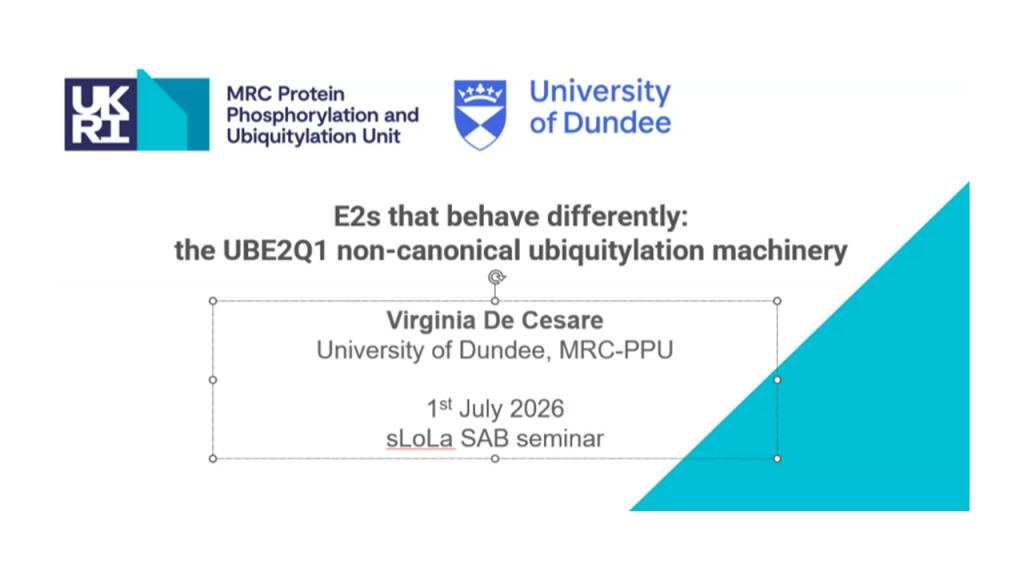
    Virginia de Cesare gave a comprehensive and engaging seminar on her group’s work to understand non-canonical ubiquitination, with a particular focus on ubiquitin attachment to hydroxyl groups.

    She highlighted the role of enzymes such as UBE2Q1, an E2 conjugating enzyme associated with ubiquitin transfer to serine and threonine residues rather than the more familiar lysine-linked modification. These reactions generate oxyester-linked ubiquitin species, which are chemically less stable and therefore more challenging to detect using standard approaches. The seminar emphasised how studying UBE2Q1, including through knockdown, is helping to reveal previously underappreciated forms of ubiquitin signalling and their potential importance in cellular regulation.

  • Prof Bryan Dickinson Seminar: Chemical tools to probe signaling by protein lipidation

    The team welcomed Professor Bryan Dickinson (The University of Chicago, and member of the sLoLa Strategic Advisory Board) to present a seminar entitled “Chemical tools to probe signalling by protein lipidation.” 

    Bryan discussed his team’s innovative research developing activity-based probes for thioesterase activity and inhibitors of zDHHC enzymes, as well as the use of the thioesterase probes to explore changes in S-acylation that occur in response to growth factors and other stimuli. He described novel research on the S-acylation of ERK1/2 and the downstream effects on gene expression, alongside the use of chemical probes to investigate the function of mitochondrial thioesterases and their role in regulating Peroxiredoxin (PRDX) proteins and mitochondrial redox buffering capacity. The seminar highlighted the power of modern chemical biology approaches for elucidating the functional consequences of S-acylation.

  • Maurine E Linder Seminar: Fatty acyl tales

    The sLoLa team and their wider collaborators welcomed Professor Maurine Linder (Cornell University) for an online seminar on Tuesday 31 March 2026.

    Maurine is one of the pioneers of the S-acylation field and the chair of our Strategic Advisory Board. Maurine delivered a fascinating historical perspective on S-acylation, highlighting how early biochemical discoveries have shaped the field as it stands today.

    With many members of the sLoLa team new to the area, the discussion of early challenges and breakthroughs in identifying S-acylation and deacylation enzymes provided an excellent introduction to the landmark studies that defined the field.

  • PhD Success

    Congratulations to Rocio White who has recently been awarded her PhD.

    Rocio completed her doctoral studies at the University of British Columbia, investigating the role of the S-acylating enzyme, ZDHHC9, in oligodendrocyte maturation, function, and neuronal development.

    She will begin working on the AcylERATE project as a PDRA in the Tate Group in April 2026.

  • Knowledge Transfer Event

    black smartphone near person
    Prof Jennifer Greaves was invited to give a talk to the Aston Institute for Membrane Excellence at the University of Aston on the experience of sLoLa from idea to funded project.

    The event started with Dr Jen Whale, Aston University’s Strategic funding Manager, introducing the scheme followed by Prof Greaves’ talk on her experience of the sLoLa from idea to funded project. This was followed by a Q&A session, networking and a tour of the new AIME labs which are due to open in Spring 2026.

  • sLoLa Grant Holder Workshop 2026

    Members of the AcylERATION Team (Jennifer Greaves, Abbey Butler and Choa Ng) attended the sLoLa Grant Holder Workshop in Birmingham on 2nd/3rd February 2026

    The BBSRC annual event brought together team members from all active sLoLa grants to: Network with each other; share best practices and lessons learned; and showcase roles and responsibilities.

    Prof Greaves commented “The workshop was excellent. I found it really enjoyable and the networking opportunities were really useful. The main point was how quickly the scientific landscape is evolving….they emphasised the need to pivot and adapt as necessary “.

  • Kick Off Meeting

    The BBSRC sLoLa project ‘AcylERATE’ held a kick off meeting in Glasgow on 26/27 January 2026.